

Overcome today’s modern-day relaxation challenge with Relaxation Therapy. A clinical intervention to help people achieve a calmer state. Most importantly, have methods to manage anxiety, reduce stress and muscle tension by activating your body’s natural relaxation response.
Sukoon Counselling, a relaxation and mental health clinic helps individuals, couples and families to relax and reduce the stress in life.
Relaxation therapy is the application of relaxation techniques to help you focus on yourself and remove the internal clutter.
If you’re finding it hard mentally and always feel on edge, it’s ok to ask for help. Contact Dr. Kirti Choudhary, an experienced psychologist and a certified relaxation therapist, for online and offline consultation.
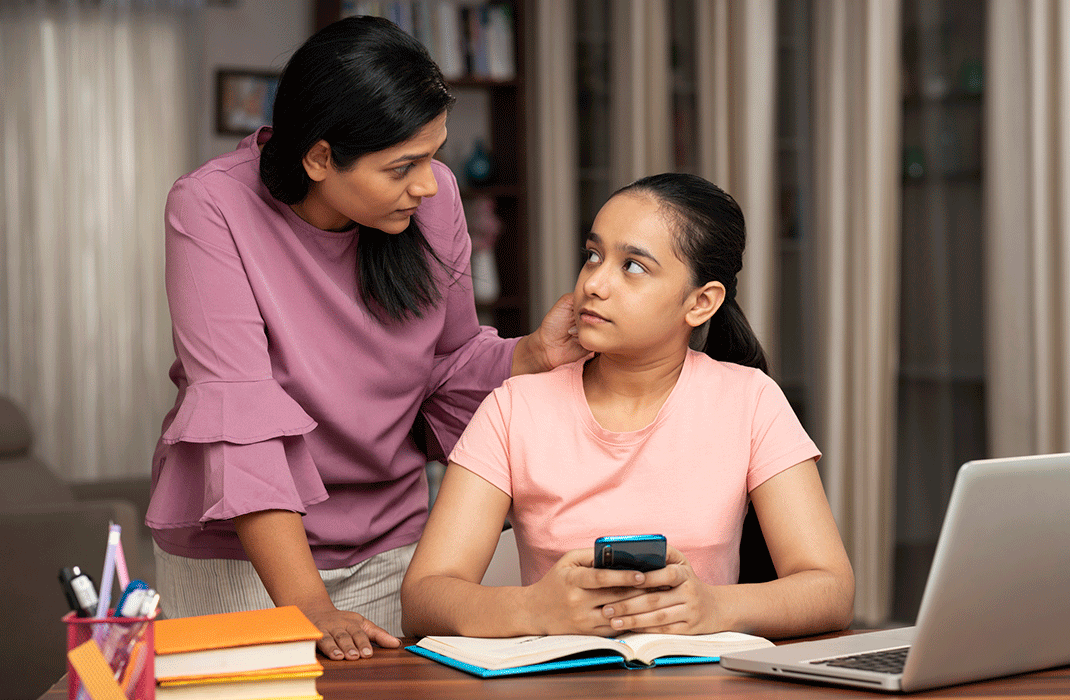

Irrespective of what you do—entrepreneur, teacher, serviceperson, homemaker, student, or even a teenager, living on your nerves is the new “normal”. Sadly, this makes our mental health fragile. As a result, today many are struggling with anxiety, stress, panic, fear, as well as somatoform disorders.
Relaxation training works to treat physical and mental pain.
Adults as well as children benefit greatly from using relaxation techniques for:
We understand the basics of serious mental health issues, trauma or abuse. That’s why, we customize therapies and techniques to complement a patient’s unique needs.
For that, our mental health professional firstly evaluates;
Subsequently, we do short trials, and fine-tune techniques that suit and work for the client. Thereby, successfully evading any emotional or physical discomfort.

Our mental health professional at Sukoon Counselling offer a wide variety of relaxation techniques for;
Reduce fear, anxiety, and panic with guided meditation sessions. Rhythmic breathing to reduce feeling overwhelmed.
Practice gratitude and staying in the present moment with various mindfulness activities to calm the mind and body.
Heighten self-awareness with focused breathing and feeling calm by using the senses of smell, sight, sound, and touch.
Slowly tensing and relaxing pain muscle groups (feet, toes, neck, shoulders, etc.) systematically.
Deep breathing techniques to calm the nervous system and reduce stress. Tackle burnout with slow, focused deep breathing techniques like box breathing, belly breathing, pursed lip breathing, pranayamas, etc.
An evidence-based method designed for self-regulation. Mental exercises that use visual cues, verbal affirmations, and body awareness, like physical senses and breathing, to control the body’s stress.
Choosing Sukoon Counselling means stepping into a space where science, clinical expertise, and genuine human connection meet. We understand the intricate and delicate relationship between the mind, nervous system, and the body.
Our personalized therapeutic journey is a multi-step process to ensure that we reach the root cause of your issues and equip you with evidence-based tools.
Contact Sukoon Counselling for relaxation therapy and experience real calmness and relief.
Initially, we try and test to know which relaxation techniques suit your issues. Also, we start with short sessions of 15-20 minutes and then build them up to 45 to 60 minutes.
Sometimes, our mind, body, and emotions are wrecked.
All of this calls for more of a clinical approach in the form of relaxation therapy to reset the nervous system.
Sometimes “just a nap” or a “walk” can rewire your nervous system.
However, many are constantly stressed or suffer with physical pain. Also, many have serious mental health issues like anxiety and depression. Using the right relaxation therapy calms the nervous system and provides relief.
A relaxation therapy course usually needs 4-6 sessions before one can independently use them when stressed. Your mental health provider shall assess and recommend the number of sessions needed to treat the issues.
Take the first step toward emotional well-being, personal growth, and positive change with compassionate, professional guidance.
Copyright © 2025 sukoon counselling. All rights reserved.